Saturday, September 17, 2022

ELSIE DAL SANTO - DRESS MAKER

Elsie Dal Santo was born May 10, 1928, in Lithgow, NSW.  Her father Gino arrived in Australia in 1925 aboard the ship Regina D`Italia and her mother Caterina arrived in Australia in 1927 aboard the ship Orvieto. 

Gino settle in Lithgow and got a job in the mine.  He worked for approximately 12 months as a miner and then the family moved to Surry Hills in Sydney.  Gino got a job as a gardener/caretaker.  Gino and Caterina`s second child, Ugo Dal Santo, was born in 1929.  

When Elsie was two and half years old, Gino came down to Balgownie, hoping to find work at the Port Kembla Steelworks, but the jobs were scarce. Whilst the family stayed in Balgownie, Gino headed by train to Queensland looking for work.  Once he found work he called for Caterina and the children, who then headed for Queensland to be with him.  Gino got a job on a sugar cane farm working as a roustabout and Caterina also worked there, in the kitchen, cooking for the employees and the owners.  Elsie was now five years old.

The family stayed in Queensland for four years before Gino and the family went back to Sydney, NSW.  Gino and Caterina bought a shop in Balmain, a mixed business that sold take away hot food items as well, with the family living upstairs.  They had the shop for 14 months before selling, as Elsie was a sleep walker and fell down the stairs, leaving her black and blue. 

The family came down to Tarrawanna in 1938 and Gino rented a house on the Princes Highway, Corrimal.  After six months Gino purchased the house next door that was situated in Short Street.  It was now 1939 and Gino returned to the mine at Mt Kembla.  The house in Short Street backed onto the Princes Highway.  

Gino applied for permission to build a shop front on his land that faced the Highway.  Permission was granted and the bricks arrived, but the work halted due to the commencement of WW2.

Elsie went to the local primary school at Corrimal.  She loved to play sports and was very good at it.  Elsie played Vigoro (a game that was similar to Cricket) and basketball, where she represented the district.  At different stages throughout her school years, Elsie played Netball, Vigoro, Tennis, Athletics and did Horse riding, all on the weekends 

At high school Elsie continued with sports and she learned to sew.  She would become quite the sewer.  Elsie left school when she was 15 years old.   She had several odd jobs. Occasionally she would help out at the Fazzolare Brothers fruit shop, early morning on the weekends.  She then got a job for six months at the Streets ice cream factory that was situated across the road from where she lived.

When Elsie was 16, her friend told her about a job vacancy with Mrs Kenny, in Gladstone Avenue, Wollongong.  Mrs Kenny, who was a dress maker, had approximately 6 employees and was looking for staff.  Once Elsie started her new job, she enrolled at the Technical College and took a dressmaking course for six months. 

Elsie worked for Mrs Kenny for approximately two years.  Elsie, with two of her friends, got jobs working for Bramsen`s mens wear at Corrimal, making trousers and doing alterations.

Whilst working for Bramsen`s, Elsie and Marion commenced making dresses.  As they got busier with dress making and everyday wear, they began making ball gowns and wedding gowns.  Elise and Marion did a whole range of dress making.  

One of the first wedding dresses that Elsie remembers them making was of a parachute silk fabric that was brought back from New Guinea after the war. They also did the bridesmaids dresses for that wedding, which were made from Taffeta.  

One of the girls left Bramsen`s and only Elsie and her friend Marion remained.  Soon after, they both left Bramsen`s and got jobs in a rubber factory.  Marion continued working there and Elsie went back to dressmaking at home.  Elsie also had a part time job as an usherette at the Strand Picture Theatre, Railway Street, Corrimal.  

In the meantime, Gino went back to building the shop on his land in Corrimal, as the war was over and he had permission to commence.  In 1949 the shop was finally finished and open for business.  It was a Habaerdshery and Crockery Store.  Elsie ran the store and had room to sew.  She made everyday wear, evening and wedding dresses.

They sold crockery dinner sets and ornaments.  Caterina, Elsie`s mother, was the one who wanted to sell the crockery and she looked after that.  She also helped Elsie with the dressmaking side.  In the shop they also sold fabric to the public.  In the shop they never sold the wedding dress material.  The customers had to organise that themselves.  

Elsie often went to the warehouses in Sydney to purchase the fabric for the shop. When Elsie ordered the fabric, she would get it delivered by rail to Corrimal Railway Station, awaiting for pickup by the delivery driver,  Mr Larkin, who would then deliver it to the shop.

In 1952, at the age of 23, Elsie married James Fairfax.  Elise took on the task of making her own wedding dress and what a task it was!  Elise’s wedding dress consisted of 42 yards of fabric, which is approximately 38.5 meters.  Her wedding dress had a massive train at the back and the fabric was Chantilly lace with silver thread throughout .  The stiffened underskirts of the dress were made of buckram.  Buckram is a fabric that is usually soaked in a starch to make it stiff.  The dress itself was also fully lined with taffeta.  The dress was stunning and also extremely heavy.  When Elsie was photographed in the studio in her wedding gown, the photographer had to scrunch up the skirt and the train of her dress because it wouldn’t fit in the (small) room.

Elsie and James moved in with Elsie’s parents in Corrimal.  In 1955 Elsie closed the shop as her first child Louise was born. Elsie didn’t do any dressmaking at this time.   When Louise was 18 months old Elsie and James moved into their newly built house in Caldwell Avenue, Tarrawanna.  At their Caldwell avenue home, Elsie had a room at the back for her dressmaking.

In 1957, whilst pregnant with her second child, Elsie resumed her dressmaking. Elsie felt quite awful with her second pregnancy and many times her mother would be sitting on the floor pinning dresses, as Elsie had to sit up all the time.  Elsie and James lived in Caldwell Avenue for approximately 13 years before moving into their newly built home in Thurston Crescent,  Corrimal.  She was also closer to her parents, who were just up the road.

As well as general dressmaking, Elsie made wedding dresses, bridesmaids  dresses, the going away dress and many times they mother of the bride dress.  She did the whole package.  Over the years, from when she starting  at the shop, Elsie made many dresses.  She made quite a few wedding and bridesmaid dresses for those who were married at the Luccarda Wedding Reception Centre. 

She started to make many more dresses from home and once she had her  car licence, Elsie would take the dresses herself to the bride on the day and dress them. Elsie also made wedding dresses for both of her daughters when they married.  Louise married in 1977 and Suzette was married in 1982.  

In 1976 Elsie`s mother, Caterina, suffered from a stroke.  Elsie, who had retired from dressmaking 12 months prior, concentrated on caring for her mother.  Elsie cared for both parents.  She would often do the cooking, cleaning and even mowing the lawns for her parents. Elsie`s day for her parents would start from 8am till 6pm and then she would go home and care for her own family.  Caterina Dal Santo passed away November 8th, 1983.  A month later Gino passed away on December 3rd.

Although Elsie officially retired from making wedding dresses in 1975, she occasionally made dresses here and there.  The last dress Elsie made was for her daughter Louise.  Louise wanted a new dress to attend her nephew`s wedding and had no doubt that Elsie would do a great job,  Elsie was 93 years old when she made the dress for Louise. 

Elsie Dal Santo made wedding dresses for almost 40 years, that was her life! She was also dedicated to raising her family.  When Elsie began sewing she used her mother’s Singer Treadle sewing machine.  Eventually, she purchased a Singer industrial sewing machine.  Elsie only ever used the one machine for her dress making business.  It would usually take about three weeks to make a complete package of a wedding dress, 3 x bridesmaid and a going away dress.  Elsie made all her own clothing as well.  At age 13, Elsie started slowly making them. By time she was 16 she was making all her own clothes. Elsie never purchased any clothing, except jumpers and coats, ect.  

Elsie still lives in her home at Thurston Crescent.  At 94 years young, Elsie has a zest for life and is close to her family.  Many times you will find her tending to her beautiful garden and caring for her flowers.   


1940 District Champions Corrimal Public School


Elsie played basketball on the weekends.  

She also did horse riding. Here she is with her friend Elvie at the Wollongong Show.


Elsie and Marion, at work, joyous as this day the war was declared over.


The last dress Elsie made for her daughter Louise.

Elsie was 93 years old.


Video of Elsie`s dresses


Elsie on her Wedding Day in the photo studio.


All images from the collection belonging to Elsie Fairfax (Dal Santo)


Monday, August 22, 2022

DARIO (DEREK) BORGO

Dario Borgo was born in 1934, in Wollongong, NSW.  He is one of five children and the youngest son of Mario and Giulia Borgo.  Mario Borgo first came to Australia with his friend Antonio Carollo in 1922, aboard the ship, Boonah.  He arrived on October 23rd, approximately six weeks after the birth of his first child, Angelina (Gina), who was born the month before.  Giulia his wife was still in Italy.  

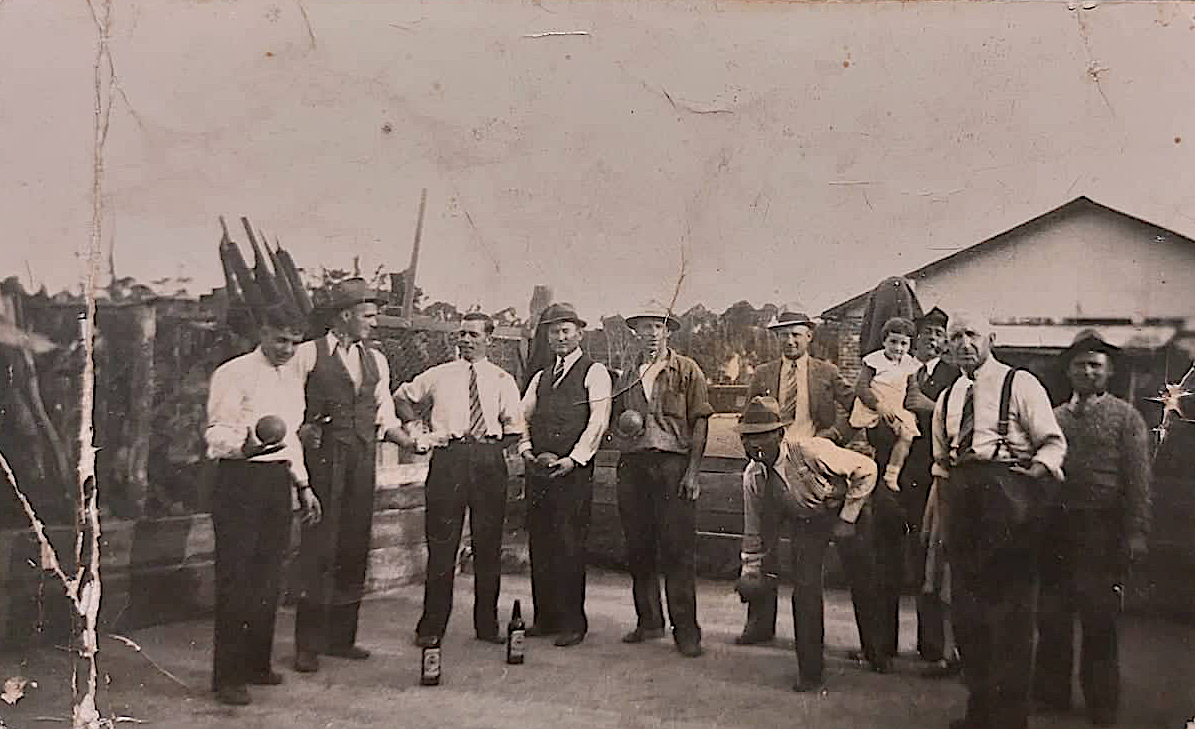
Mario made his way to Wollongong and found a job in the mines.  He settled in Tarrawanna.  In 1923 Giulia arrived with their daughter Gina.  Mario was working and doing well.  Mario was a very keen bocce player and built a bocce court at the back of his rented house which would also become a boarding house, for other immigrants.  Often, at his home on the weekend, there would be friends and family gathering for bocce, music, good food and good company.  

Mario and Giulia had two more children, a boy Sergio Francesco (Frank)  who was born in 1924 and a daughter Armida who was born in 1926.  Giulia was working extremely hard with the boarding house and her growing family.  Mario on the other hand wasn’t very well and was diagnosed with Tuberculosis (TB), from working in the mines.  The work in the mines was extremely heavy.  Mario wasn’t happy with his diagnosis and so in 1927 the family left Australia and headed back to Italy.  

Mario went to an Italian Doctor who diagnosed him with dust on the lungs, not TB.  He was given treatment and a plan to heal his body and within a short time, he recovered.  Once he started to feel better, Mario tried his luck again and headed back to Australia for a second time, leaving his family behind.  Giulia was back in Italy with the family and living with her father in-law.  Giulia was also pregnant.

This time it was around 1929, the depression had started and many people were getting laid off.  Mario stayed with his friend and brother in-law Giovanni Binotto who was married to Mario’s sister Fiore.   

Desperate to find work, Mario and three friends from Sydney tried to go to the USA.  They arrived in Canada only to find that immigration had closed three days before. Downhearted, he headed back to Australia for a third time.  It was now 1930.  

Giulia had gone into labour and delivered a baby boy stillborn and at the same time Armida wasn’t well.  Armida had what seemed to be cold and flu symptoms.  It had been a particularly cold winter in Italy, and many times Giulia would often sleep in the same bed as Armida to try and keep her warm.  Unbeknown to anyone how sick she really was, the following day Armida passed away from Pneumonia. Giulia was inconsolable and Mario was on the other side of the world, desperate.

Mario made his way back to the local area and found a job in the mine in Scarborough and rented a small shack in Clifton.  He called for his wife Giulia and the children to come to Australia.  Giulia sold what she could and gathered what little money she had and started making plans to leave.  Giulia and Mario had been through too much and just wanted the family to be all together, no matter what.  Mario was now 35 years old.

Whilst awaiting his wife and family, Mario rented a small house in Douglas Road, Fernhill.  He wasn’t happy about working in the mine, so he changed course and purchased a business with his friend Antonio Carollo. It was a liquor store that was situated downstairs at 275 Crown Street, Wollongong, in the Thorne`s Building.

On August 10, 1931, Carollo and Co purchased the business from Lorenzo Filippi, who acquired the licence for the liquor store in June, 1929. The liquor store also sold cigarettes.  They had one delivery truck and did home deliveries.  In 1932, Giulia arrived with the two children, Gina and Frank.  Now the family was all together.

The business was doing quite well, they bottled the wines on site into demijohns from massive kegs and sold larges bottles of beer.  The kegs were called hogheads and they held 65 gallons of liquid.  They would   be delivered by truck and then unloaded and moved into the store, then siphoned into the demijohns.  The beer bottles were wrapped in a straw sleeve for protection.  They also sold spirits and continental liqueurs.  Mario would run the shop and Antonio would do a lot of the deliveries, usually in the morning, as he still worked in the mines.  A few years after Dario was born, around 1936, the Borgo family had moved into their family home at 228 Princes Highway, North Wollongong, a newly built brick cottage.

1939 was quite a significant year for the Borgo family.  First of all, Frank had been hospitalised due to illness, but thankfully recovered in due course. That same year Antonio Carollo passed away, from a mining accident and WW2 broke out.

Daughter Gina was now working in the shop alongside her father. Gina acquired her drivers licence and would also help with the deliveries. Frank worked with his father Mario in the wine shop before enlisting in the army in 1942 and eventually Dario would help out after school!

On Frank’s return home from the army, Mario opened another wine shop in Port Kembla.  Frank held the licence and ran the shop.  Around 1955, Mario opened his new Wine Shop in Wollongong called M. Borgo and Sons, Wine and Spirit Merchants.  Mario and Dario ran the new shop whilst Frank ran the Port Kembla store.

By this time, Gina had married and no longer worked for her father, as she left the area with her husband.  The new shop was situated in Burelli Street.  It was across the street from behind the old store in Crown Street.  The Burelli Street shop also sold Italian groceries such as Pasta, Coffee and Deli items.  They had parking onsite for six cars and they were open 5 days per week from 8am to 6pm, and on Saturday half a day, 9 am - 12pm.  They also had two new delivery trucks.

With the larger shop they now had a greater holding capacity and at the back of the shop they now housed seven large vats with a holding capacity of 750 gallons of liquid each.  The wines were still delivered to the store via trucks in the 65 gallon hogshead kegs, but this time they were able to pump straight from the hogshead into the vats.  The vats held sweet sherry, dry sherry, semi sweet sherry, port, claret, hock and brown muscat.  From the vats they now filled one gallon flagons as well as the two gallon demijohn.

Dario was in charge of home deliveries at the new store.  Typically, deliveries were daily, with the order taken from the day before. Grocery lines were also delivered, but the main focus was the liquor.  The delivery run went all over the local Wollongong area, including Helensburgh.  It also went down through to Nowra and as far north as Liverpool, Sydney, NSW.  Many Italian farmers and households would get their wine delivered. Except on Saturdays as there were no deliveries.

They operated the shop like this for approximately ten years.  The alcohol was selling very well, but a decision was made to no longer carry the Italian Grocery lines.  Other businesses in the area were carrying them, and so Mario Borgo focussed solely on the liquor.  He would soon open a first of it`s kind in Wollongong, a drive through liquor store.   In 1965 Dario married Inge Guzik.

Around 1968, Mario purchased the property next door that used to be  a blacksmith.  He renovated and extended the Burelli Street store and a new drive through was added.  Customers could now collect their purchases conveniently stepping straight out of their cars.  It became really busy, really quickly.  It was a huge success.  Some people shopped early morning as the shop was open 8am and closing at 6pm Monday to Friday and half a day Saturday.  They now sold only bottled wines, beer, spirits and liqueurs.  They still had the vats, but only sold the flagons.  They no longer sold the demijohns.

To focus on the drive through, the Port Kembla store was sold and Frank worked along side Dario and his father.  Not long after the drive though was completed, Mario soon fell ill and in 1972 after a long illness, he passed away.   

Around 1973, whilst Dario was still working at the Burelli Street shop, he purchased an old house in Market Street, Wollongong, with his friend George Coutus.  Dario had an old unused licence for selling wine by the glass and used it for his new venture, The Market Street Bistro.  The bistro was a wine bar and steak house.  They had seafood and other menu items as well, opening for lunch and dinner, 7 days per week.  Dario and Inge also welcomed their first daughter, Stephanie.

The Market Street Bistro was very well received and it` s location in the centre of Wollongong was also popular for business lunches.  The night time trade was also a boon for Wollongong.  There was a courtyard in the front and at the back, and on a Saturday afternoon they had a jazz band.  It was constantly busy with patrons. Inge would often help out at the Bistro at night and on the weekends. Inge would serve behind the bar.  In 1975 Dario and Inge welcomed their second daughter, Martina.

During the years they extended the bistro`s setting capacity, as it was outgrowing itself rapidly. It was approximately 60 seat capacity prior to renovation.  Dario finished with the Market Street Bistro, in 1978, selling his share of the business back to his friend George.  

In 1979 the Burelli Street Wine shop was sold and would continue to be used as a drive through.  Dario took some time off, deciding what he wanted to do next.  Dario and his brother Frank built two sets of apartment blocks.  The first one was at 27 Church Street, Wollongong.  There were 8 in the block and each apartment had two bedrooms.  The second one was at 30 Kembla Street, Wollongong. It was a block of 12, two bedroom units.  What made these units unique was their location.  They were situated up on Smiths Hill.  Some of the first blocks of units built there, at the time.

In 1981 Dario and his wife Inge purchased the Harp Hotel in Wollongong.  Around the same time, his brother Frank purchased the Lake Illawarra Hotel.  The Harp Hotel was situated in the downtown centre of Wollongong.  It was a grand old hotel with 15 rooms for accommodation.  One of the things that made The Harp Hotel a draw card was the fact that each of the rooms had an ensuite.  That was very rare for a hotel/pub to have that.  Most older pubs had rooms with communal bathrooms.  Upstairs there was a dining room with in-house room service that provided three meals per day to those were staying at the hotel, if they wished to order.

At The Harp they also had a snack bar that was open all week.  The snack bar sold simple items such as hamburgers, sausage rolls and sandwiches. The snack bar employed one staff member during the week and two on the weekend.  On a Saturday afternoon, they also had a jazz band in the lounge.  After a very successful 4 years, Dario and Inge sold the Harp Hotel.  Frank sold the Lake Illawarra Hotel around the same time prior to his death.  On March 12th, 1985 Frank Borgo passed away aged 60.  Sister Gina passed away in 2016.

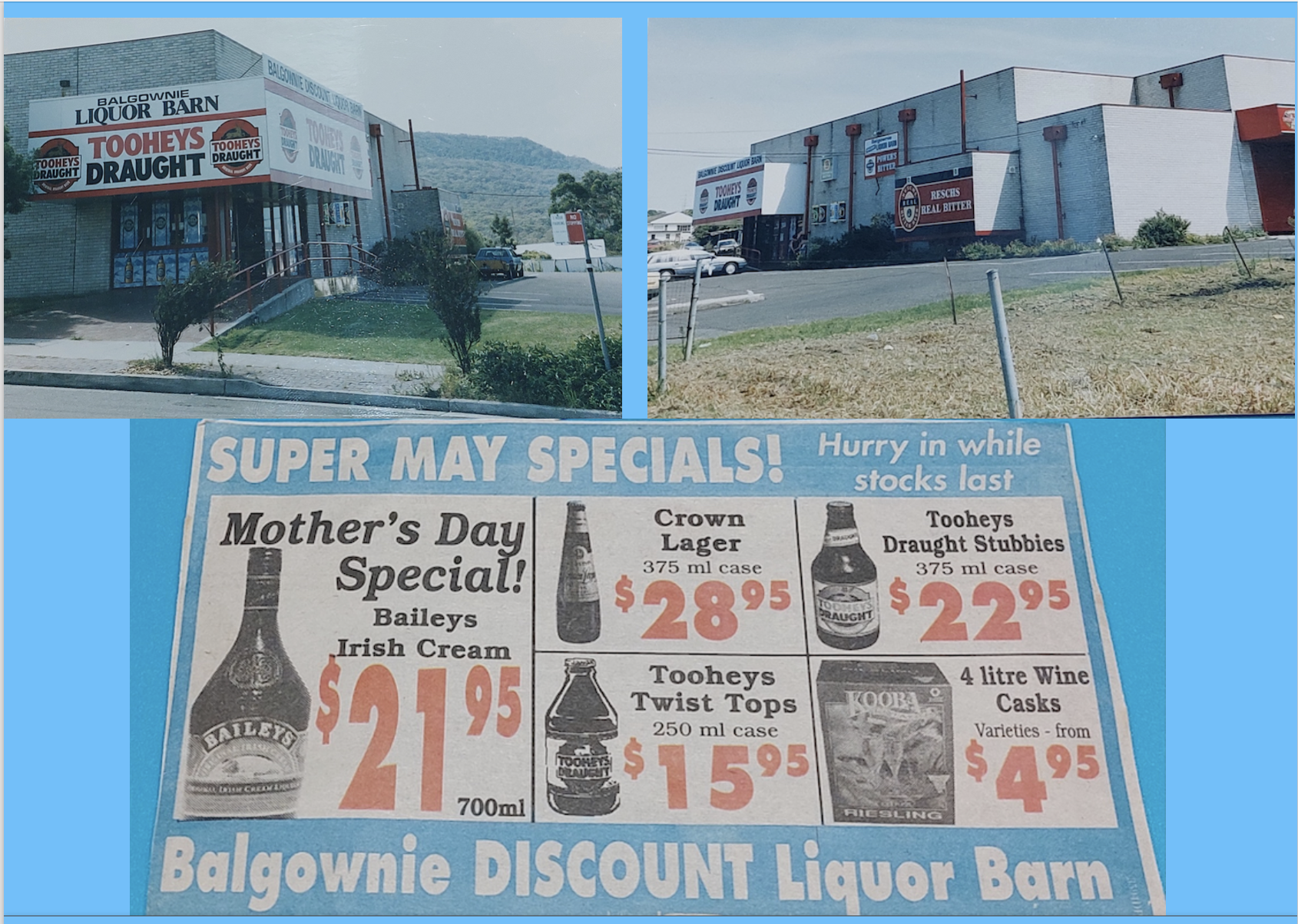
After having a break from the Harp Hotel, Dario and Inge went on a much needed holiday.  Upon their return, Dario went straight back into the liquor trade.  He purchased the Balgownie Hotel and the Balgownie Liquor Barn.  He quickly sold the hotel on and focused solely on the Liquor Barn.  Dario ran the liquor barn for 12 years.   He sold the Liquor Barn in 1996 before retiring completely.   

Dario and Inge were keen travelers and would travel many times overseas with their family.  Dario spent his working life dedicated to the industry that his father Mario worked in.  Mario Borgo was well known in the Italian community.  Not only was he a keen bocce player, but he would go on to become a life member of the Corrimal Bowling Club, and he was a champion player.  Mario Borgo was instrumental in the commencement of the Fraternity Bowling Club, at Fairy Meadow.  Through Mario’s dedication and determination, we now have this iconic club for all to enjoy.

The Borgo family certainly contributed greatly and left a legacy.  First through Mario and then through Dario and Frank Borgo, who continued to work in the industry, creating new and exciting ventures along the way.  Sister Gina was also involved with the Italian community through her commitment and dedication staying connected to her roots. Her women’s group `Daughters of the Italian Pioneers of the South Coast`, was formed in the late 70`s and ran for nearly three decades.  Dario Borgo continued to stay connected to the Italian community for many years to come, through local events and celebrations.


The original basket for home deliveries at the Crown Street store.

A young Dario Borgo and the Crown Street delivery truck.

Mario Borgo at his North Wollongong home at his vines where he still made his own wine and his love of bowling for the Corrimal club.


The new Burelli Street store.

Above image: Mario at the vats filling the flagons

 
The Balgownie Liqour Barn at 138 Balgownie Road


All the above images from the collection belonging to Dario Borgo

Thursday, July 14, 2022

THE FAZZOLARE BROTHERS

Pasquale, Vincenzo and Francesco Fazzolare were born in Gioiosa Ionica, Reggio Calabria.  The three brothers all came to Australia at different times and would eventually become well known in the Wollongong and Illawarra area for their fruit and vegetable business.

Pasquale was the first to arrive in Australia.  He came in 1927, Nov 20th, on the ship Caprera.  He was 18 years old.  His address listed him living in Cremorne, Sydney, NSW.  Unfortunately, not much is known about his life for the next ten years.  He did however, list his profession as a fruiterer.  In 1937 he became a Citizen of Australia, becoming Naturalised on August 26th at the age of 28.

The following year his brother Vincenzo arrived February 8th, 1938, aboard the ship Esquilino.  He was 24 years old.  His address listing was the same as his brother Pasquale, but it is believed that in the same year, they opened their fruit shop at 66 Crown Street, Wollongong. 

The following year, 15 year old Francesco Fazzolare arrived in Australia, traveling on board the same ship as his brother Vincenzo, the Esquilino, Feb 10th, 1939.  By the time Francesco arrived in Australia the fruit shop was up and running.  He went to live with his brothers in Wollongong and began working with them straight away.  One of his jobs was to wheel the timber barrow full of fruits and vegetables, up and down the street, for people who wished to buy.

The Fazzolare brothers leased the shop at 66 Crown Street and also lived upstairs (with their families).  This certainly made it convenient for the brothers who were building the business.  The shop would soon become the Paragon Fruit Palace.

In 1943 John Fazzolare was born.  John is the son of Pasquale and Ines.  John recalls vividly how his father’s day would start early morning, before dawn, traveling to the markets to purchase and pickup produce.  As he returned back to the shop, he continued working and would finish late at night.  Even though they lived upstairs, John said that he hardly saw his father, as he was always working.  He also recalls his mother constantly cooking.  Ines would cook for the regular staff in the shop.  The shop was open 7 days per week and some of the staff worked very long hours and they were provided home cooked meals by Ines.  

The shop opening hours were early morning for customers from around 7 am and finishing late into the night around 11 (which is just unheard of).  They would also use this time for restocking.  The fruit shop consisted of two store fronts.  One was the retail shop itself.  The other shop was the store room for produce and where the goods were unloaded off the truck and brought into the shop.  It also served as the wholesale area and eventually the cool rooms would be housed there as well. 

The business certainly was building and they would soon have more than one truck for their deliveries.  They purchased from the markets in Sydney, as well as other produce suppliers along the way.  Pasquale did much of the driving and purchasing in the beginning.  Pasquale drove to the markets everyday.  Within a short while they purchased a second truck, as it was needed to keep up with the demand.  The second truck usually went to the markets about 3 times per week.  The Fazzolare brothers also had a petrol pump behind the shop that was operated by hand to fuel the trucks.  Frank Fazzolare would also become one of the drivers, heading to the markets for produce as well as working in the shop.

Vince would become a main buyer of the produce from the markets, too.  It would become one of his well known skills, as throughout his career in the industry no matter who he worked for, he was always employed as a buyer, for his experience and knowledge, for the people that knew him, as he was well liked and well respected.

The Fazzolare brothers supplied food outlets, cafes and restaurants and other eateries.  They did runs up and down the coast, as well as supplying ships coming into the harbour at Port Kembla, who needed to purchase produce to feed their crews.  They sold tobacco, cold drinks and ice cream in their shop and also did home deliveries.  

They were known for their generosity with customers and their fantastic displays in their fruit shop.  Mountain high piles of fruits and vegetables in wonderful colourful patterns.  They would also be well known for their community support with donations in the way of produce and money, for local groups and charities that were fundraising.

Lena Fazzolare, who is one of the daughters of Vince and Vittoria, always remembers her father saying, `give more, not less`, when it came to the customers.  She too remembers how her mother was cooking along with Ines.  How both wives were cooking for the staff, three home cooked meals per day.  Lena also remembers the dormitory at the back of the shop, where many of the staff would stay.  

In 1952 Pasquale and Vincenzo put in an application for a new building in Crown Street.  It would be the first of it’s kind, a three story building in downtown Wollongong.  It eventually got approved and around 1953 it was officially opened.  It was known as The Fazzolare Building.  It cost around 60,000 pounds.

The building was at 48 - 50 Crown Street, Wollongong.  A portion of the building wrapped around the corner of Corrimal Street too.  It really was something spectacular for the area.  There were offices upstairs, meeting rooms and shops at the street level.

Some of the people who leased spaces in the building were WEA (Workers Education Association), South Coast Secretarial Services and Dowset Engineering.  Others like a Tailor, Tattooist, Accountants, Photographer and Wedding Portrait Specialist, all occupied upstairs at one time or another.  Down stairs at the shop fronts you would find a Continental Butcher, Italian Restaurant (that changed hands and cuisine types overtime), Electrical goods store, Bazaar, and of course Guido and Co Italian Delicatessen. Thriving businesses, at a thriving time in Wollongong.

In 1953, Wollongong was abuzz with Coronation fever.  The Coronation of Queen Elizabeth II took place on June 2nd.  The main street of Wollongong was decorated with a gala display.  Flags, bunting, colourful lights and pennants all adorned the street.  Shop owners had their stores decked out and dazzling with adornments in celebration. Other towns had their own displays and decorations too! Union Jack flags were hung and even homes were celebrating the event with their own festive colourful regalia.  The week long celebration ended with a street procession down Crown Street of school groups, other organisations, sports teams and floats.  The Fazzolare brothers opened up their building to the public as a grandstand.  They charged a silver coin donation and the proceeds went to the Smith Family charity organisation.  There were early bird spectators waiting to get their spots, ready for the procession.  They raised over $600 equivalent of today`s money with the standard inflation rate. 

Chris Fazzolare is one of three sons of Frank and Patricia.  Chris can recall as a very young boy going to the markets with his father in the truck along with his older brother Paul and younger brother Michael.  What stood out to him was how everybody at the markets knew who his father was.  Frank was very popular.  Chris also remembers helping to bag up onions some years later, when his father was at the Kenny Street fruit market.

In 1959 tragedy struck with the death of Pasquale Fazzolare, on the 17th of July.  It happened early morning as he was doing his usual run to the markets.  He was near Helensburgh and he had pulled over, stopping the truck to have a rest.  He was hit from behind by another truck and was thrown from the cabin.  He was only 50 years old.

An unfortunate series of events took place as Pasquale died intestate. As there was no will, creditors began demanding monies to be repaid and the building now up for grabs. Vince Fazzolare, would spend the next six years paying back creditors and debts that would eventually see him lose the business.  The whole incident deeply hurt him and as hard as he tried, he couldn’t save it.

In 1966, the fruit shop business at 66 Crown Street, Wollongong, which Vince and Frank were still running, was sold and in 1967 Vince Fazzolare officially filed for bankruptcy.  Vince Fazzolare continued working in the fruit and vegetable industry for several years before retiring completely.

In the meantime, Frank Fazzolare, worked as a truck driver for another fruit merchant in Wollongong called Whiteman`s Wholesale.  He also worked at the FVM fruit market in Kenny Street, as a driver.  In 1971 Frank was involved in an accident driving the truck for FVM.  He suffered from some injuries, but nothing major.  However, the accident seemed to reveal some brain issues, where he was tested and diagnosed with Huntingtons Disease.  It is believed that Frank had the beginnings of the disease some years prior.  Huntingtons Disease is a genetic disorder that affects the brain and nervous system.  It would eventually claim his life, as it had done with his father, his sister Maria and eventually his eldest son Paul.  At age 64, Frank Fazzolare passed away 17th of Feb, 1988.  The last of the brothers, Vince Fazzolare, passed away on May 6th, 1995 at age 81.

I felt a sense of sadness as I wrote this story.  Sadness, because there was nothing written about them, yet a lot of the older generation still remember them.  My mother told me about them when I was a teenager and even though I didn’t know anything about them, I got the feeling that they certainly left an impact.  Working for almost 30 years as the Fazzolare brothers,  then with Vince and Frank working for another (approximately) 25 years combined in the industry, an impact was certainly left.

The contribution that was made by the Fazzolare brothers, in my opinion, was immeasurable.  Their imprint was, and still is, all over the local Wollongong area, from the community that they served to the economic impact that was left behind.  Not only that, through their extensive experience and knowledge of the industry, others would be inspired to start their own businesses too!  They really were the founders of the Italian fruit and vegetable merchants in Wollongong.  I felt humbled and honoured that I was able to write and share their story, and so very grateful to have connected to their children and families, without who, this story would not have been told.


 15 year old Frank Fazzolare
with the timber wheel barrow
ready for deliveries
 

16 year old Frank Fazzolare
riding down the lane 
heading to the shop
at Crown Street

 
The three Fazzolare Brothers with their spouses.
Left to right: Pasquale with Ines, centre  Patricia and Frank 
and right is Vince and Vittoria.  Here they are 
celebrating the engagement of Frank and Patricia.
They are at the Sea Breeze restaurant which was situated
at the street level underneath the Fazzolare building.


 Paul, Chris and Michael Fazzolare with their cousin, 
standing on top of the truck driven by their father Frank.
 
All above
images from the collection belonging to Patricia Galvin (Fazzolare)


The Fazzolare building at 48 - 50 Crown Street, Wollongong 

 
Image from the collection belonging to Margaret Formigoni


Frank Fazzolare truck crash Sunday September 27, 1971.

This made the front page of the newspaper.


Monday, June 6, 2022

FVM, LMZ AND ZENO PIRLO

In 1961 a group of 30 banana growers from Lismore formed a co-operative to sell their bananas wholesale, direct to the retailer, leaving out the middle man (aka: the fruit markets).  The Chairman of Directors of FVM (Fruit and Vegetable Market Co-Op), was Mr Florian Volpato.  Florian was well known in Lismore as a businessman as well as being the Italian Consulate General representative for the area.
 
The co-op saw the potential that Wollongong had to offer and set about finding a property for their banana ripening plant and in 1962 they found a site at 42- 44 Kenny Street, Wollongong.  It was a large parcel of land with two houses. 
 
They built five ripening sheds and two cool rooms.  The ripening sheds could house 3000 cases of bananas and the cool rooms were for other fruits and vegetables. This type of fruit and vegetable plant was the first of it’s kind in the Wollongong area.  The bananas came down via rail from Lismore to Wollongong, twice per week on a Monday and Thursday.  With FVM purchasing the bananas off the co-op in Lismore, the daily train would bring 1000 timber banana boxes on the day and FVM would pick up the fruit and take them back to the ripening sheds at Kenny Street.

Some of the men who came down from Lismore to help run the site were  Gino Mazzorana, Dino Lorenson, Mose Pirlo, Luciano Menin, Sergio Sudiro and Louis Pirlo, though not all at the same time.  The manager was Dino Lorenson.  Dino Lorenson lived in one of the houses with his family and later Mose Pirlo lived in the other.  Louis, Sergio and Luciano, at one stage, were all living at the Luccarda Boarding house, where Louis would eventually meet his future wife Marie Luccarda.  Yet another link to the Luccarda`s of Tarrawanna.  Louis would also live in one of the FVM houses at a later stage.

Others who worked there were Peter Del Ben, Armando Rubbo, Frank Lopreato and Vince Fazzolare.  Vince Fazzolare had a wealth of knowledge and experience about the industry.  He knew about how to purchase from growers and the markets and their systems of operation.  This would become invaluable as he shared this knowledge with the crew at FVM.  The Fazzolare brothers were well known in the local Wollongong area.  Many Italians frequented their fruit shop at 66 Crown Street, Wollongong that they had been running for decades.

Things started to move quickly and the business was doing well.   The co-op started doing local runs once per week and would travel down the south coast, from Nowra to Narooma and many towns in between. They had runs as far as Liverpool, and even Goulburn. Mose Pirlo had an important role as well.  He was in charge for the Bega run down the south coast.  FVM would supply all Coles stores from Helensburgh through to Bega.  Louis Pirlo was another driver for FVM that would do long runs some of which included, Griffith, Batlow and Goulburn and he did a lot of the buying too!

FVM also supplied ships that used to come into Port Kembla Harbour.  The ships would purchase fruits and vegetables to feed their crews. 

Around 1966, the co-op purchased the shop at 66 Crown Street, Wollongong that Vince was still operating and renamed it, Tropicanza.  The Tropicanza sold fresh fruits and vegetables daily, with phone in orders as well as free delivery.   They had the Tropicanza for several years.  Armando Rubbo and another gentleman ended up running the Tropicanza until it closed down around the mid 70`s.

In 1968 Mose purchased a house in Mathews Street, Wollongong, for him and his family. The co- op was in good shape, so Mose decided to go Italy for a three month holiday in 1969.  When Mose came back he felt that things had changed. 

In 1970, his brother Zeno arrived in Australia with his wife and they lived together with Mose at his home in Wollongong.  Zeno had worked in the farming industry back in Italy and also had his truck licence, which would become invaluable later on.  Zeno got a job at the Port Kembla Steel Works, but also helped out at the co-op.

Luciano Menin would go to Batlow, Orange and Griffith too! He was the buyer for those areas. In 1971, Luciano helped in the commissioning of a new RFW truck to be built for the many long trips that he would make back and forth. The truck had a more powerful engine and could take heavier loads.  RFW were a Sydney based truck manufacturer that not only built road trucks, but trucks for construction, the mining industry, as well as other specialities. The new RFW truck had a sleeper cabin as well, so the driver could stop and rest.  This helped the situation for a short while, but it was still too demanding work for many of the men and eventually he would leave around 1974, as did others.

Louis, who was also unhappy, decided to leave, returning to Lismore to help his father on the farm.  The men were working extremely hard, under strenuous and stressful conditions.  They would do long runs, having to load the trucks with the produce and bring them back home all without rest.  The trucks then had to be unloaded at Kenny Street, a lot of it being manual labour.  Mose, even though he was disheartened, continued working for a while, but that didn’t last long.  After dedicating himself to the business and even having lived on site for some years, Mose too made the decision to leave. 

In the meantime Mose, Louis (who was Mose`s cousin) and Zeno had discussions about the possibility of opening their own fruit stores.   Zeno was apprehensive at first, as he already had a good job at the steel works and he was concerned that his knowledge of the English language wasn’t very good.  Mose and Louis convinced him and he agreed. With Louis, moving back to Wollongong in 1972, the three of them set out to start a new venture opening two fruit shops.  One was in Warilla Grove shopping centre and the other was in Parkside Plaza, at Dapto.  The business was named the Pirlo Brothers.

Zeno ran the Warilla store and Mose ran the Dapto store.  The store at Warilla was already established at Warilla Grove Shopping Centre and it had a good sized cool room.  Zeno rented a house in Warilla with his family so he could be close to work.  A year later he purchased a home there, one street away from the fruit store. The Dapto store was a new store that they established themselves.   

They would purchase most of the produce for their stores from the Sydney markets, but they would buy their bananas from the Kenny Street Co-Op.  Both of the stores were doing well.  They also did fruit runs down the south coast.

In 1975, Florian Volpato met with the Pirlo`s and asked them to return to the Kenny Street site.  By this time four of the key guys who worked at FVM had left, including the manager Dino Lorenson, who retired from the co-op.  The business was not doing well and was in debt. After much deliberation the Pirlo brothers agreed.  Approximately six months later, they sold both their stores at Warilla and Dapto.  Zeno also sold his home in Warilla, and purchased a home in Wollongong.  Peter Del Ben and Vince Fazzolare would stay on as employees.

On their return to the Kenny street site, they rebranded under the name LMZ.  LMZ stood for Louis, Mose and Zeno.  The three of them did a lot of the driving as well.  They took out a loan, got to work and went even bigger.  There were more fruit runs and they even supplied some local Woolworths and Coles supermarkets.  They had four delivery trucks from the original FVM and they purchased two large Volvo semi trailers.  

Steven Pirlo, who was Mose`s son, would often work there after school whilst growing up.  As Steven got older he drove the trucks delivering produce to shops and cafes. Aside from purchasing seasonal fruits and vegetables, LMZ made many trips to Griffith, as well as the Sydney markets, to purchase tomatoes as well as wine grapes, when they were in season.  With the many people of European heritage in Wollongong, LMZ would sell large quantities of tomatoes and grapes to those in the community who wished to make their own tomato sauce and wine.  Catering to the many Italians and Greeks especially.

Around 1980 they opened a retail section, demolishing one of the original houses to make space for parking. They opened to the public, trading three and a half days per week. The trading hours were early morning till around 6pm, closing at 7pm on Thursday for late night shopping and half a day Saturday.  Locals could purchase fresh fruits and vegetables as well as eggs, bread and honey.  Home delivery was also available.

They had between 7 - 8 people employed at LMZ with the wives of the Pirlo men helping out as well. The Pirlo men (LMZ) had made the co-op a success and when it was sold in 1983 they all walked away with money and a business that was debt free.  Mose and Louis returned to Lismore.  Zeno remained in Wollongong and stayed on with the new owners for approximately three months.

After his short stint with the new owners of LMZ, Zeno then worked for about 7 months at a mushroom farm in Helensburgh.  Part of his job at the mushroom farm was to take the mushrooms to the Sydney Markets and sell them. 

Around 1985, Zeno thought about opening his own fruit store.  The new owner of LMZ had one of the original trucks from FVM just sitting on his property, out in the weather and not being used.   The new owner didn’t use it at his fruit and vegetable business as he felt it was too old.  Zeno purchased the old truck from him for $500, fixed it up and the truck ran really well.  He opened a fruit shop and called it Zeno’s Fruit Market.  It was situated in a small complex in Gipps Road, Gwynneville.  After 18 months  at Gwynneville, Zeno had received an offer on the shop, he accepted the offer and sold the shop together with the truck.  

Zeno Pirlo went back to work at the Port Kembla Steel Works as a truck driver, finishing all together in the fruit and vegetable industry.   Zeno stayed at the Port Kembla Steel Works until he retired in 2018.


Mose Pirlo with two of the FVM trucks

Mose with his family at the house at FVM


 Images from the collection belonging to Steven Pirlo


Zeno at his Gwynneville Fruit Market


                                  Video images from LMZ Fruit Market                              


 Images from the collection belonging to Zeno Pirlo


Monday, April 18, 2022

GIOVANNA CAROLLO

Giovanna Carollo`s father Antonio, was born on the 26th of August 1898, in the village of Zugliano.  Zugliano is situated in the province of Vicenza, Italy.  He was 24 years old when he arrived in Australia in 1922.

Antonio came to Australia with his friend Mario Borgo who was also from Zugliano.  Three years later in 1925 their friend Giovanni Binotto would join them and call Australia home.  They were all good friends but Antonio and Giovanni were particularly close.

Antonio and Mario both came to Tarrawanna as the mines were close by.  Within a short time both men acquired jobs.  When the great depression hit in 1929, many miners were laid off.  

In the meantime, Giovanni Binotto had brought his wife and two children out to Australia.  Giovanni’s wife Fiore, was Mario Borgo`s sister.  By 1930 Giovanni and his family were living with Luigi Luccarda.  Giovanni was also laid off from the mine.  He would be out of work for the next 7 years.

It was a particularly hard time for so many back in those days.  With no work, many were living in boarding houses, sheds or garages that were `questionably liveable`.  It was all about sheltering people and giving them a place to stay.  Everybody worked together to make do, the best they could.  Being Italian, many were skilled in agriculture, so they were able to sustain themselves by growing much needed fruits and vegetables.  Even though it was hard, people were happy.

Giovanni was a very skilled handyman and gardener and he built the bocce courts and the grape vines at Luigi Luccarda`s house.  Luigi Luccarda`s bocce courts became quite the meeting and gathering place for many.  It kept them connected to their fellow countrymen as well as a place to go, when there was nowhere to go.  Mario and Antonio would also frequent Luigi’s place.  Having such a meeting place must have been a such a blessing for everyone.

In 1931 Antonio and Mario went into partnership and purchased a wine shop in Crown Street, Wollongong.  It was purchased from Lorenzo Filippi who had been operating the shop since 1929.  Mario had stopped working in the mine, as it was making him sick.  He found the work very heavy and hard on him physically.  Antonio was still working in the mine and together they had a plan for operating the store.

Mario would run the shop during the day.  As Antonio worked in the afternoon at the mine, he would schedule the mornings to do deliveries for the wine shop.  Antonio had his drivers licence as well as his own flat top truck.  This seemed to work out very well.  The business was picking up.

In 1938, Antonio married Agnes Dargan, who was the girl next door.   In that same year their daughter Giovanna was born.  Eleven months later, Antonio had an accident in the mine and on 20th September 1939, Antonio Carollo passed away.  He was 41 years old.

Antonio`s passing was devastating for everyone. Agnes had to now find work to support herself, as there were no widow pensions available at that time.  Agnes got a job as a hotel cook and she lived on site.  Antonio`s best friend Giovanni Binotto and his wife Fiore took in little Giovanna and raised her as their own along with their two children Luigi who was 16 years old and Caterina who was 14.  

Giovanni and his family moved into a house that he rented from the Crofton family.  The house sat on the grounds of the Crofton family property, that spanned across three street frontages. There was the main house (the homestead) as well as three other cottages on the property.  When Giovanni was unemployed, he would do the gardening, landscaping and maintenance of the homestead and the property itself.  The Croftons appreciated him and his work so much, that they did not charge him any rent.  The homestead was indeed huge, and needed constant attention.  The Crofton family grew to love Giovanni quite a lot.  

By 1940 the Croftons had both passed away.  Giovanni remained a tenant of the Crofton family, whose daughter, Kathleen Collier now owned the property.  Giovanni would eventually move into the homestead, renting it from Mrs Collier.  When Giovanni was renting the main house, there were still many immigrants coming and needing a place to stay.  Giovanni opened the house to boarders and sometimes entire families would arrive from Italy as well.  Word had gotten out about the homestead, because of it’s size, families were soon staying for extended periods of time, till they were ready to move on.  There could be up to 7 extra people staying at any one time along with Giovanni and his family at the homestead. 

In 1950 Mrs Collier wanted to sell the entire property and wanted Giovanni to have first preference to purchase it.  Giovanni didn’t have the money to purchase the lot, but he did express his interest in purchasing the homestead itself, that stretched across three blocks of land.  Mrs Collier agreed and sold the homestead to Giovanni.  She then sold the remainder of the property that was subdivided into many blocks.  During the time they were living there in 1948, Agnes Carollo (Giovanna`s mother) died at age 40. 

Giovanni eventually, went back to work in the mine and continued until his retirement in 1957, the same year that Giovanna ( his step daughter) was married at the age of 19. Giovanni’s children Caterina and Luigi had moved out years before.  Giovanna and her husband Antonio Sandona, lived in the homestead with Giovanna`s parents.

Giovanna and her husband Antonio began building their first house on land given to them by Giovanna`s parents.  The plan was to build a new house and move Giovanni and Fiore in with Giovanna and her husband Antonio, as the homestead was in its original state but with no modern facilities.  There was no hot water, no sewerage and the house was way too big for Giovanni and Fiore.  Four years before, at the age of 15, Giovanna had left school to help care for her mother Fiore who became incapacitated, due to a brain haemorrhage.  Giovanna never worked as she dedicated herself to looking after her mother.  Giovanna`s husband Antonio was of tremendous support to her.  Having to care for both of her parents now (as Giovanni’s health was failing too), Antonio also would help Giovanna care for her parents. Antonio was working at the steels works at the time, and he was working hard to get the house finished for everyone to move into.  Unfortunately, Fiore never got to move into the new house, as it was still a few months away from being finished.  Fiore passed away in 1962.  Giovanni, who also was quite ill now,  passed away a year later after a long battle with bladder cancer.  The year was 1963. For the past ten years from ages 15 - 25, Giovanna nurse both her parents due to their ailing health and basically did it on her own.  There was no outside help.

1964 saw the birth of Giovanna and Antonio`s first born child, Giancarlo.  That same year Giovanni’s homestead was sold.   Giovanna and Antonio now had their own family and in 1970 their daughter Fiona was born.

In 1978 Gina Borgo (who was Mario Borgo`s daughter) and her close friends Irma Calgaro and Rina Filippi, had a discussion about having a get together with some of the women who were the daughters of immigrants that had lived locally as children. As the children married and moved on, many moved out of the area, while others stayed.  Gina, Irma and Rina wanted to reconnect to their roots and to stay in touch with as many of them as possible.

The three women decided to form a group calling themselves `Daughters of the Italian Pioneers of the South Coast`. The original group of women were born from the 20`s decade.  Some came from Italy while others were born here.  They then made a decision to bring in the younger ones too.  The younger group of women were from the 30`s and many were born here. So approximately 64 women in total made up the combined group.

The first reunion was at The Fraternity Bowling Club in Fairy Meadow.  They had a magnificent luncheon catered for by the club and the women were just so happy to have seen their friends after such a long time.  The excitement of getting together, of sharing lost memories, was so heartfelt.  The majority of the women were from the Veneto region, but other Italian regions were represented too, making up the group.  With the older women, they shared their stories of hardships that they endured.  Many of these women married Australian men, as there were not many Italian men available at the time.  A lot still talked in their old dialect which was quite funny to them.

Each year the reunion would take place on the first Sunday in March.  No one received an invitation, they just knew where to turn up, back at the Fraternity Club at lunch time.  Often they would have photos taken and a story or a write up would appear in the local or Italian newspapers.  

Over the years the group has naturally gotten smaller.  Some have passed, some no longer drive, or some have moved to a different place.  In the last ten years the group reduced to about 19 people.  

Since the pandemic over the last two years, the group has all but dissolved.  There are just a few of them now, who are very close friends. Giovanna still keeps in touch with them and hopes that one day they can get together again for another luncheon.


Antonio Carollo at Luigi Luccarda`s bocce court.

Antonio Carollo on the right (hand on hip)

The group of older women from the 20`s era.  Including Gina, Irma and Rina.


The group of younger women from the 30`s era. Including Giovanna, front row left wearing blue dress.


All images from the collection belonging to Giovanna Sandona (Carollo)


MIRANDA FERA ( BERZANTI)

Miranda Berzanti arrived in Australia March 30, 1958 on board the ship Sydney , disembarking in Sydney NSW April 8.  Miranda is known to eve...